
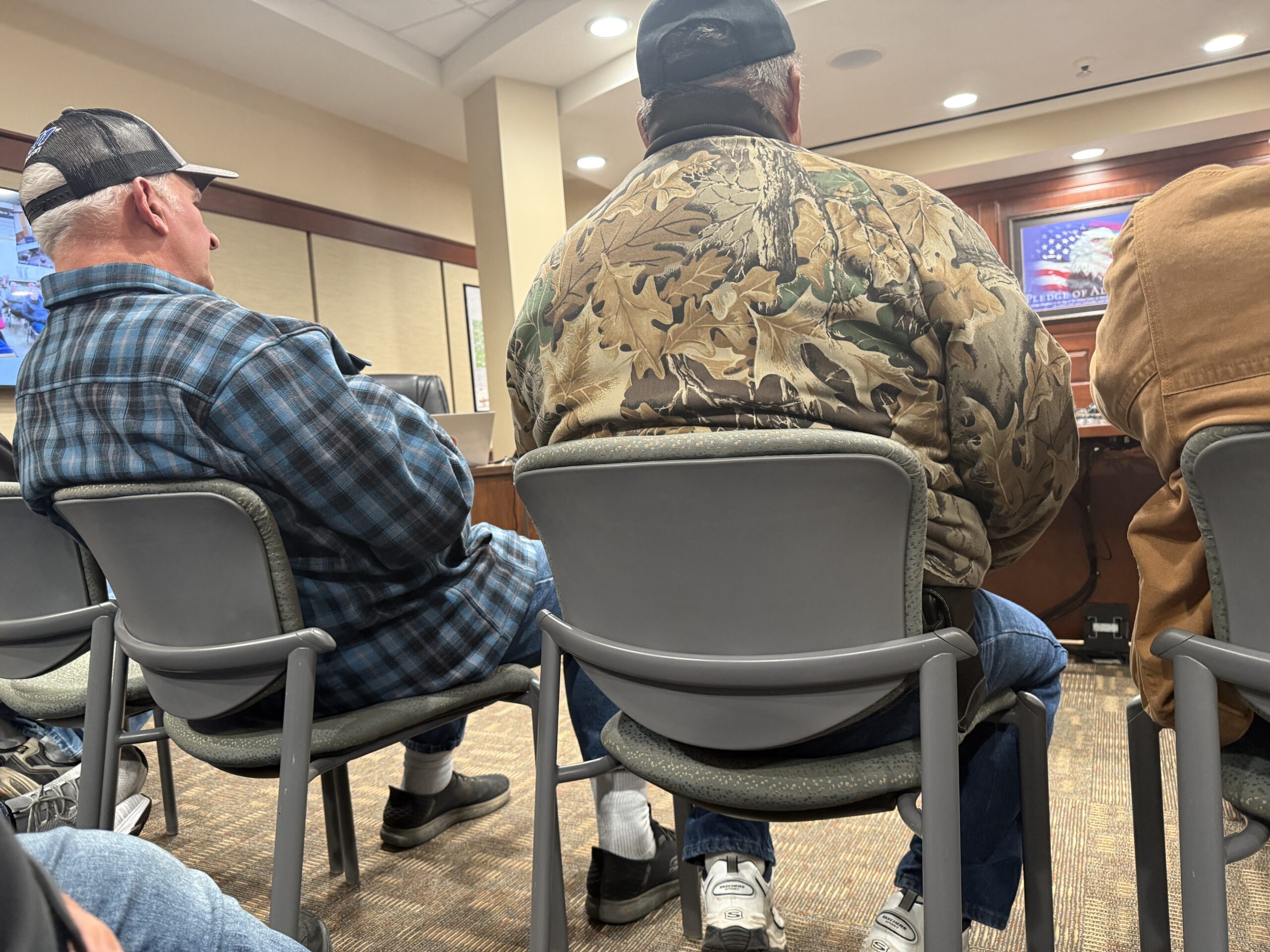
Last night, November 17th, 2025, several members of the RVAA Nation attended the Redwood County public forum regarding the state’s decision to eliminate Minnesota’s shotgun zone beginning in 2026. While the state has opened the door for rifles statewide, counties have been given the ability to impose further restrictions. This meeting, held at the Redwood County Government Center, invited the public to give input on whether Redwood County should restrict deer hunting to shotguns only.
A Listening Session — Not a Debate
At the start of the meeting, county commissioners emphasized that this was a listening session. They wanted to hear what their constituents want, not engage in back-and-forth argument. Several commissioners expressed frustration that the state put the burden of this decision on counties.
One participant explained the legislative context: the state approved rifle use statewide, but counties that historically supported shotgun-only restrictions requested the ability to maintain those limits locally. As a result, every Minnesota county may now choose whether to follow the statewide rifle standard or restrict firearm use to shotguns.
The meeting was notably well attended, with more than 50 people present. Many chose to speak, and the overwhelming majority supported following the state standard and allowing rifles for deer season.
Concerns Raised — and Addressed
Only two attendees voiced concerns about opening the county to rifle use. Their worries centered on hunters shooting toward neighboring properties or stands, as well as the fear of people shooting from roads.
Other participants quickly noted that these issues are unrelated to firearm type:
-
Shooting from the road is already illegal, regardless of whether a hunter uses a shotgun or rifle.
-
Shooting toward other hunters or homes is unsafe no matter the platform.
Several hunters and firearm safety instructors highlighted that continued education—not platform restriction—is the real solution. They shared that since the implementation of Firearm Safety Class requirements, the number of trained hunters has increased while incidents have decreased.
Points in Support of Allowing Rifles
The majority of the session focused on why many hunters support rifle use. Their comments highlighted history, safety, ethics, and modern data:
Historical Context
One attendee opened with the origins of Minnesota’s shotgun zone. Established in 1942, shotgun restrictions were intended to support fair chase and protect a smaller, struggling deer population—not because shotguns were safer than rifles.
Today, Minnesota’s deer herd is far larger and more robust, and herd management is now accomplished through tag allocation rather than firearm type.
Safety Comparisons & Real-World Data
Speakers emphasized that:
-
Rifles are already being used safely in the region through rifle-caliber handguns and during coyote hunting.
-
Northern Minnesota allows rifles without a higher rate of incidents.
-
All surrounding states permit rifles for deer hunting, also without increased safety issues.
Iowa was cited as the most recent example:
-
2016 (before rifles): 23 shooting incidents
-
2017 (first year rifles allowed): 14 incidents
-
2018: 16 incidents reported by December
Rifle legalization did not increase accidents — numbers actually declined.
Multiple attendees also noted that rifles offer higher accuracy, which leads to:
-
Cleaner, more ethical harvests
-
Fewer wounded deer
-
Safer shot placement overall
Youth & Accessibility
Several speakers pointed out that rifles are more kid-friendly due to significantly lower recoil compared to slug guns. Reducing recoil helps young hunters make accurate shots, enjoy their experience, and stay engaged in the hunting heritage that sustains our outdoor traditions.
Existing Rifle Use
Numerous participants referenced that rifle-caliber pistols have been legal for years without increasing incident rates. If cartridge safety were truly a concern, this would not hold true.
Additional Topics
There was discussion referencing MN DNR statistics on license numbers and hunter demographics, reinforcing that Minnesota’s hunting community is highly educated and continues to prioritize safe practices.
What Happens Next
At the close of the meeting, commissioners shared some insight into their current position. Leading up to the forum, they received four phone calls from citizens opposed to rifle use. Commissioner Dennis Groebner stated that he had not heard from any constituents supporting rifles—prompting two attendees to speak up immediately, identifying themselves as his constituents and voicing clear support. Two additional constituents mentioned the same message after the meeting.
As of now, no decision has been made. Commissioners remain in a holding pattern and will likely take up discussion during an upcoming meeting.
County Administrator Vicki Knobloch Kletscher clarified the process:
-
Counties must report their decision to the state by May 2026.
-
If commissioners do not call the matter to a vote, the state’s rifle allowance automatically goes into effect.
-
If the commission does pursue a firearm restriction, they must create an ordinance and would require another public hearing as mandated by law.
-
Once enacted, the ordinance does not require annual renewal.
Our Perspective
The Redwood County community made their message clear: hunters want the option to use rifles. Tradition, data, ethics, and safety all point toward letting hunters choose the platform that works best for them. No one is required to stop using a shotgun—this is simply about providing choice.
As advocates for responsible firearm use and ethical hunting, River Valley Arms & Ammo supports adopting the statewide rifle standard. Modern education, strong hunting culture, and real-world data demonstrate that rifles can be used safely and effectively here in Redwood County.
We’ll continue following this issue and sharing updates as commissioners move toward a decision.